Sunday, January 10, 2010

Search engine results pages

The other sides of the query interface, and the only other parts of a search engine that’s visible to users, are the search engine results pages (SERPs). This is the collection of pages that are returned with search results after a user enters a search term or phrase and clicks the Search button. This is also where you ultimately want to end up; and the higher you are in the search results, the more traffic you can expect to generate from search. Specifically, your goal is to end up on the first page of results — in the top 10 or 20 results that are returned for a given search term or phrase. Getting there can be a mystery, however. We’ll decode the clues that lead you to that goal throughout the book, but right now you need to understand a bit about how users see SERPs.

Let’s start with an understanding of how users view SERPs. Pretend you’re the searcher. You go to your favorite search engine — we’ll use Google for the purposes of illustration because that’s everyone’s favorite, isn’t it? Type in the term you want to search for and click the Search button. What’s the first thing you do when the page appears? Most people begin reading the titles and descriptions of the top results. That’s where you hook searchers and entice them to click through the links provided to your web page. But here’s the catch: You have to be ranked close enough to the top for searchers to see those results page titles and descriptions and then click through them, which usually means you need to be in the top 10 or 20 results, which translates into the first page or two of results. It’s a tough spot to hit.

There is no magic bullet or formula that will garner you those rankings every time. Instead, it takes hard work and consistent effort to push your site as high as possible in SERPs. At the risk of sounding repetitive, that’s the information you’ll find moving forward. There’s a lot of it, though, and to truly understand how to land good placement in SERPs, you really need to understand how search engines work. There is much more to them than what users see.

- seo consultancy services-

Thursday, January 7, 2010

Structure of a search engine


By now you probably have a fuzzy idea of how a search engine works, but there’s much more to it than just the basic overview you’ve seen so far. In fact, search engines have several parts. Unfortunately, it’s rare that you find an explanation describing just how a search engine is made — that’s proprietary information that search companies hold very close to their vests — and that information is vitally important to succeeding with search engine optimization (SEO).

Query interface

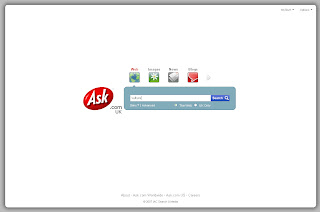
The query interface is what most people are familiar with, and it’s probably what comes to mind when you hear the term ‘‘search engine.’’ The query interface is the page, or user interface, that users see when they navigate to a search engine to enter a search term. There was a time when the search engine interface looked very much like the Ask.com page shown in figure. This interface was a simple page with a search box and a button to activate the search, and not much more.

Today, many search engines on the Web have added much more personalized content in an attempt to capitalize on the real estate available to them. For example, Yahoo! Search, shown in Figure, is just one of the search services that now enable users to personalize their pages with a free e-mail account, weather information, news, sports, and many other elements designed to make users want to return to that site to conduct their web searches. One other option users have for customizing the interfaces of their search engines is a capability like the one Google offers. The Google search engine has a customizable interface to which users can add different gadgets. These gadgets enable users to add features to their customized Google search home page that meet their own personal needs or tastes.

Search has even extended onto the desktop. Google and Microsoft both have search capabilities that, when installed on your computer, enable you to search your hard drive for documents and information in the same way you would search the Web. These capabilities aren’t of any particular use to you where SEO is concerned, but they do illustrate the prevalence of search and the value that users place on being able to quickly find information using searching capabilities.

When it comes to search engine optimization, Google’s user interface offers the most potential for you to reach your target audience, because it does more than just optimize your site for search: If a useful tool or feature is available on your site, you can enable users to have access to this tool or feature through the Application Programming Interface (API) made available by Google. Using the Google API, you can create a gadget that users can install on their Google Desktop, iGoogle page, or Firefox or Chrome browser. This enables you to have your name in front of users on a daily basis.

For example, a company called PDF24.org offers a Google gadget that enables users to turn their documents into PDF files right from their Google home page once the gadget has been added. If the point of search engine optimization is ultimately to get your name in front of as many people as possible, as often as possible, then making a gadget available for addition to Google’s personalized home page can only further that goal.

-seo consultancy services-

Sunday, January 3, 2010

Google Page Rank - Read More About The Concept-

PageRank is one of those mysteries that may never be completely unraveled. Volumes have been written about it, but probably the only two people in the world who understand it completely are Larry Page and Sergey Brin. That’s because it was their brainchild.
PageRank actually started as part of a research project that Page and Brin were working on at
Stanford University. The project involved creating a new search engine that ranked pages in a
democratic fashion with a few weights and measures thrown in for accuracy. Hence, the term.
(What else would you call a ranking system for web pages that was developed by Larry Page?)
The interesting thing about PageRank is that although Page and Brin conceived the idea and created the algorithm that arrives at a PageRank, it didn’t belong to them. Stanford University actually owned the patent on the PageRank algorithm until Google purchased the exclusive right to use the algorithm for 1.8 million shares of the company (which were sold in 2005 for $336 million).
PageRank is a method by which web pages are ranked in Google search results. A combination of factors create the actual rank of a web page. Google explains it this way: ‘‘PageRank relies on the uniquely democratic nature of the Web by using its vast link structure as an indicator of an individual page’s value. In essence, Google interprets a link from page A to page B as a vote, by page A, for page B. But Google looks at more than the sheer volume of votes, or links a page receives; it also analyzes the page that casts the vote. Votes cast by pages that are themselves ‘‘important’’ weigh more heavily and help to make other pages ‘‘important.’’’ In other words, it’s a mystery. A page that has more links (with equal votes) might rank lower than a page that has a single link that leads to a ‘‘more important’’ page. The lesson? Create pages for visitors, not for search engines.

- SEO consultancy services -